



A New Standard for New Energy Infrastructure: The rapid development of renewable energy is making the Battery Energy Storage System (BESS) an increasingly critical component of the modern power system. While solar and wind power are considered green energy sources, BESS is the tool that helps these energy sources operate stably, flexibly, and capable of being dispatched according to load demand. However, along with the rapid expansion of electricity storage scale come increasingly stringent requirements for technical safety and environmental protection. BESS fire and explosion incidents in the US, South Korea, China, and Australia in recent years demonstrate that storage batteries are no longer conventional electrical devices but have become high-risk energy systems if appropriate protection standards are lacking.
In this context, the issuance of TCVN 14499-4-3:2025 on "Electrical energy storage systems - Part 4-3: Protection requirements for battery energy storage systems against environmental conditions" holds special significance for the development of the energy storage market in Vietnam. The standard was developed based on the international IEC 62933-4-3 standard. This indicates that Vietnam is gradually approaching BESS as a strategic energy infrastructure that requires systematic risk management right from the start, rather than merely viewing it as an auxiliary device for renewable energy projects.
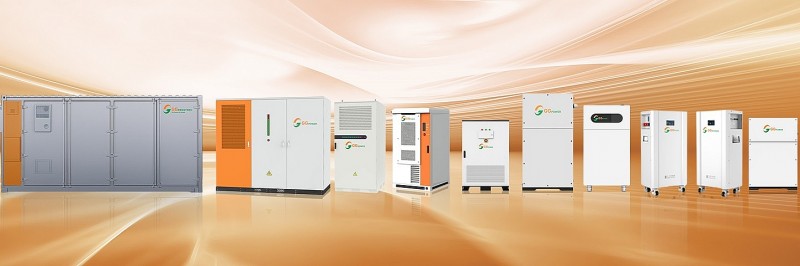 |
| Vietnam's approach aligns with the global trend of smart and flexible grid development - where BESS plays a real-time regulatory role. Photo: GG Power. |
From "Equipment Safety" to "System Safety": The most notable point of TCVN 14499-4-3:2025 is its comprehensive approach to environmental risks. While previous standards primarily focused on the technical requirements of battery cells, power conversion systems, or control systems, the new standard expands its scope to the entire BESS in relation to external environmental conditions. More importantly, the standard shifts towards a "risk prevention" mindset rather than just "incident response." This reflects the modern safety management trend in the global energy industry, especially as energy storage systems are growing in scale and becoming highly integrated into the grid.
Core Requirements of TCVN 14499-4-3:2025: Notably, TCVN 14499-4-3:2025 not only outlines general principles but also specifically identifies groups of environmental hazards that must be considered throughout the lifecycle of the BESS.
According to the standard, environmental conditions that can affect the safety and reliability of the system include: "ambient temperature", "humidity", "water", "dust", "salt mist", "lightning", "vibration and mechanical shock", "biological impacts", and "human errors"... These are all factors that can degrade performance, shorten lifespan, or lead to system failures.
The standard also emphasizes the requirement to assess risks that could lead to "thermal runaway"; simultaneously, it mandates the application of appropriate protective measures to limit the propagation of incidents among battery cells, modules, or other system components. This is a particularly crucial aspect, as most global BESS fire incidents recently have been linked to this phenomenon. Furthermore, TCVN 14499-4-3:2025 requires consideration of protective measures related to "fire prevention and fighting", "ventilation", "installation layout", "accessibility for operation and maintenance", as well as solutions to minimize risks to human life, property, and the surrounding environment when an incident occurs.
It is evident that the standard's protection scope is no longer limited to the battery pack itself but has expanded to encompass the entire electrical energy storage system and its operating environment.
Special Significance in Vietnam's Conditions: TCVN 14499-4-3:2025 has immense practical significance for Vietnam - a country with a tropical monsoon climate characterized by high humidity, prolonged heatwaves, and frequent natural disasters. Many areas currently developing renewable energy, such as the South Central Coast, the Southwest, or coastal regions, present quite harsh environmental conditions for BESS. High temperatures, salt mist, high humidity, flooding, or lightning strikes can directly affect the durability and safety of the energy storage system. Meanwhile, most current battery storage technologies are imported from countries with temperate climates. Without suitable environmental standards, the risk of performance degradation, reduced lifespan, or safety incidents is substantial.
This is even more noteworthy in the context of the revised Power Development Plan VIII (PDP8), which strongly orientates the robust development of renewable energy and energy storage systems. According to the plan, by 2030, Vietnam expects to develop between 10,000 MW and 16,300 MW of Battery Energy Storage Systems (BESS). As the proportion of wind and solar power increases, the power system will need additional storage solutions to regulate loads, stabilize frequency, and support flexible grid operations.
In other words, BESS in the future will not merely be a technological solution but will become a fundamental part of the national power infrastructure. By then, requirements for safety standards and environmental resilience will carry strategic significance.
Not Just Protecting Batteries, But Protecting the Power System: An important point to recognize is that BESS is no longer a standalone device. When storage systems are deployed at scales of tens to hundreds of MW, they can directly impact the operation of the entire power grid. A major BESS incident not only causes financial losses for investors but can also trigger a chain reaction affecting grid safety, fire protection systems, the surrounding environment, and even industrial production activities in the area. Therefore, the protection requirements in TCVN 14499-4-3:2025 are essentially aimed at protecting the entire power system, not just the storage equipment itself.
This approach aligns with the global trend of smart and flexible grid development - where BESS plays a real-time regulatory role. While past electrical standards primarily focused on operational capability, the element of environmental resilience has now become a core requirement.
Why Do Lithium-ion Batteries Carry the Risk of "Thermal Runaway"? One of the most significant risks for BESS today is the phenomenon of "thermal runaway." This is also a subject of special focus in TCVN 14499-4-3:2025, which requires risk assessment and the application of protective measures to limit incident propagation within the battery storage system. When a battery cell overheats, internal chemical reactions can self-generate additional heat. This heat then spreads to adjacent cells, creating a chain reaction. If the protection system is not robust enough, this phenomenon can lead to battery fires, gas accumulation explosions, or the destruction of the entire storage system. This is the root cause of many large-scale BESS fires worldwide in recent years, making thermal control, ventilation, and fire protection requirements increasingly mandatory criteria for modern energy storage projects.
Laying the Foundation for a Professional BESS Market: Vietnam's issuance of the TCVN 14499 standard set, based on IEC 62933, indicates a clear direction toward international integration. This not only helps establish a "common technical language" among regulatory agencies, investors, consulting firms, and technology providers but also helps curb the situation where each project applies a completely different set of standards. Furthermore, the standard provides a basis for investors to select technologies suited to Vietnam's specific conditions, particularly for solar-plus-storage models, industrial power systems, data centers, and EV charging infrastructure.
More importantly, this is a necessary step for Vietnam to move towards establishing mandatory technical regulations for BESS in the future (similar to how many countries currently manage high-risk energy infrastructure).
Standards are Necessary, But Not Sufficient: Although TCVN 14499-4-3:2025 is a major step forward, many challenges remain for the standard to be truly effective in practice. Currently, Vietnam still lacks specialized testing systems for BESS, large-scale battery safety assessment centers, and testing protocols for thermal runaway in lithium-ion batteries. Additionally, standards regarding battery recycling, end-of-life processing, and environmental impact assessments for BESS are not yet fully comprehensive.
Another challenge is the rapid pace of battery technology development. Emerging technologies like sodium-ion batteries, solid-state batteries, or next-generation storage systems may soon necessitate frequent standard updates in the future.
Furthermore, if current standards are not fully integrated into the system of technical regulations, grid connection conditions, investment licensing dossiers, or fire safety regulations, their practical application may remain uneven.
Conclusion: TCVN 14499-4-3:2025 demonstrates that Vietnam has begun transitioning from a mindset of "encouraging storage technology" to "managing storage technology risks." In the energy transition process, energy storage will not just be a technical solution but a strategic infrastructure of the future power system. At that point, standards (such as TCVN 14499-4-3:2025) will act as a foundational safety "shield" for the development of the BESS market. If implemented synchronously with appropriate systems of regulations, inspection, testing, and supervision, this set of standards could become one of the critical technical foundations for the modernization of the national power grid in the clean energy era.
Source: Dr. NGUYEN HUY HOACH - SCIENTIFIC COUNCIL OF VIETNAM ENERGY MAGAZINE
References:
-
TCVN 14499-4-3:2025, Electrical energy storage systems - Part 4-3: Protection requirements for battery energy storage systems against environmental conditions.
-
IEC 62933-4-3: Electrical Energy Storage (EES) Systems – Environmental Issues.
-
Revised Power Development Plan VIII and related implementation documents regarding energy storage.