



The Prime Minister approves the Adjustment of the Power Plan VIII
Accordingly, the general goal is to firmly ensure national energy security, meet the requirements of socio-economic development and industrialization and modernization of the country. Successfully implement a fair energy transition associated with production modernization, build a smart grid, manage advanced power systems, in line with the trend of green transformation, emission reduction, and development of science and technology in the world. Form a comprehensive energy industry ecosystem based on renewable energy and new energy.
Regarding national energy security, the adjusted Power Plan VIII aims to provide sufficient electricity for domestic demand, meeting the socio-economic development target with an average GDP growth rate of about 10%/year in the period 2026 - 2030, about 7.5%/year in the period 2031 - 2050.
Ensure safe and reliable electricity supply, meeting the N-1 criteria for important load areas and N-2 for especially important load areas, nuclear power sources. By 2030, the reliability of electricity supply will be in the Top 4 leading countries in ASEAN, the electricity access index will be in the Top 3 leading countries in ASEAN.
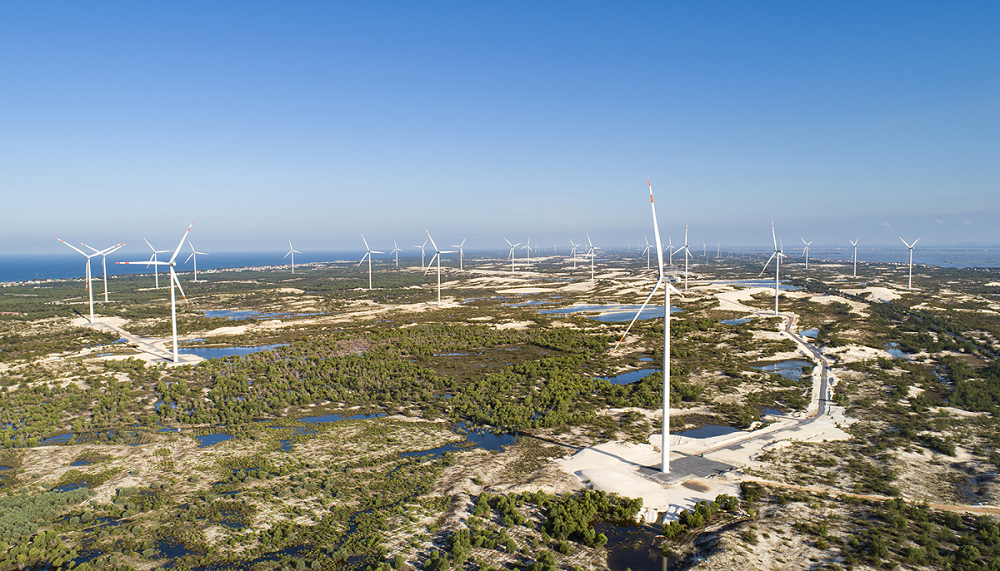 The Prime Minister has approved the Adjustment of the Power Plan VIII
By 2030, 50% of office buildings and 50% of residential houses will use self-produced and self-consumed rooftop solar power (for on-site consumption, not selling electricity to the national power system).
Regarding equitable energy transition, strongly develop renewable energy sources (excluding hydropower) to serve electricity production, reaching a rate of about 28 - 36% by 2030. By 2050, the rate of renewable energy is expected to reach 74 - 75%.
Controlling greenhouse gas emissions from electricity production to about 197 - 199 million tons in 2030 and about 27 million tons in 2050. Aiming to reach a peak emission level of no more than 170 million tons in 2030, provided that commitments under JETP are fully and substantially implemented by international partners.
Building a smart grid system capable of integrating and safely and effectively operating large-scale renewable energy sources.
Regarding the development of industrial ecosystems and renewable energy services, it is expected that by 2030, 2 inter-regional industrial and renewable energy service centers will be formed, including electricity production, transmission and consumption; renewable energy equipment manufacturing industry, construction, installation, related services, building renewable energy industrial ecosystems in areas with great potential such as the North, South Central, and South when favorable conditions exist.
Develop renewable energy sources and produce new energy for export to Singapore, Malaysia and other partners in the region.
During the management of the Plan, the Ministry of Industry and Trade will regularly review and report to the Prime Minister on the development of power sources to promptly propose adjustments to the plan and power development program to suit the actual implementation situation.
Approval of the electricity generation price framework for biomass power plants in 2025
Recently, the Ministry of Industry and Trade issued Decision No. 1008/QD-BCT dated April 14, 2025 approving the electricity generation price framework for biomass power plants in 2025.
According to the decision, the electricity generation price framework in 2025 applies to biomass power plants specified in Point a, Clause 2, Article 1 of Circular No. 09/2025/TT-BCT dated February 1, 2025 of the Minister of Industry and Trade stipulating the dossier, procedures, methods for determining and approving the electricity generation price framework; the dossier, procedures, and methods for developing and approving the electricity import price framework are specified as follows:
The electricity generation price framework for biomass power plants in 2025 is: 0 - 2,091.74 VND/kWh (excluding value added tax). In which, the maximum price is 2,091.74 VND/kWh.
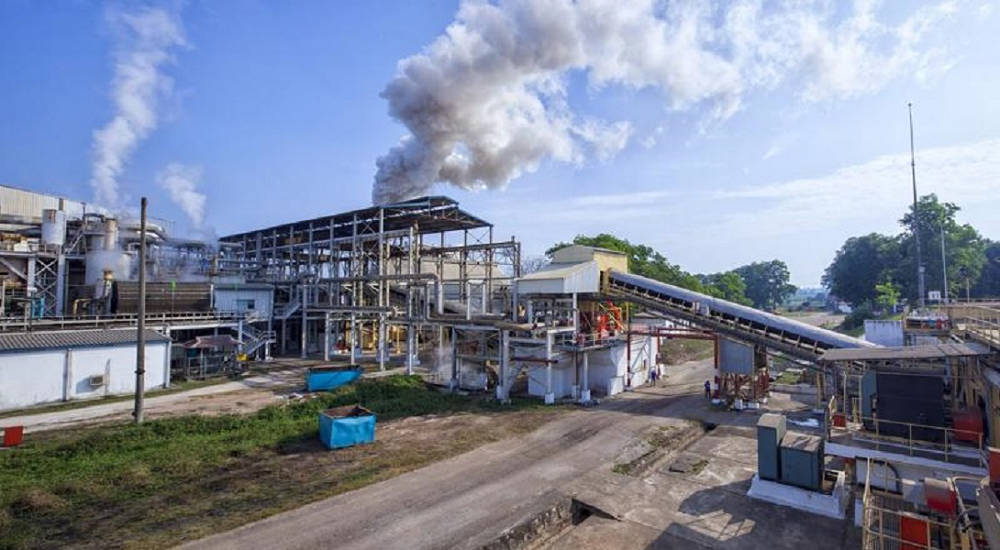 The maximum electricity generation price for biomass power plants is 2,091.74 VND/kWh
Regarding the implementation, based on the electricity generation price framework for biomass power plants stipulated in this Decision, Vietnam Electricity Group and the power generation unit shall sign a power purchase contract on the basis of compliance with the regulations on the method of determining electricity generation service prices issued by the Minister of Industry and Trade.
This Decision takes effect from the date of signing. The electricity generation price frame for biomass power plants in 2025 in this Decision shall be applied from the date of expiry of Decision No. 24/2014/QD-TTg dated March 24, 2014 of the Prime Minister on the mechanism to support the development of biomass power projects in Vietnam and Decision No. 08/2020/QD-TTg dated March 5, 2020 of the Prime Minister amending and supplementing a number of articles of Decision No. 24/2014/QD-TTg.
Announcing the report on Vietnam's offshore wind energy technical potential
On April 18, in Hanoi, the Department of Hydrometeorology (Ministry of Agriculture and Environment) in collaboration with the United Nations Development Program (UNDP Vietnam) and the Norwegian Embassy in Vietnam held a ceremony to announce the report on Vietnam's offshore wind energy technical potential.
Speaking at the ceremony, Mr. Hoang Duc Cuong, Deputy Director of the Department of Hydrometeorology, said: In the context of current climate change, especially after the Paris Agreement on Climate Change and the Net Zero Agreement at COP26, renewable energy in general and wind energy in particular are considered one of the most important solutions to reduce global climate change. The Vietnamese Government has set a target of at least 33% of total electricity output from renewable energy sources by 2030.
Vietnam is located in the strong and stable Asian monsoon region, so wind energy potential is assessed to be very abundant. This energy source will play a huge role in implementing Vietnam's commitments on climate change, promoting a zero-carbon economy. However, natural disasters originating from the sea are also very complex, which can significantly affect the stability of the operation and exploitation of this renewable energy source. Therefore, objectively assessing the potential of offshore wind energy, taking into account the impacts and risks from extreme weather events, becomes necessary and meaningful.
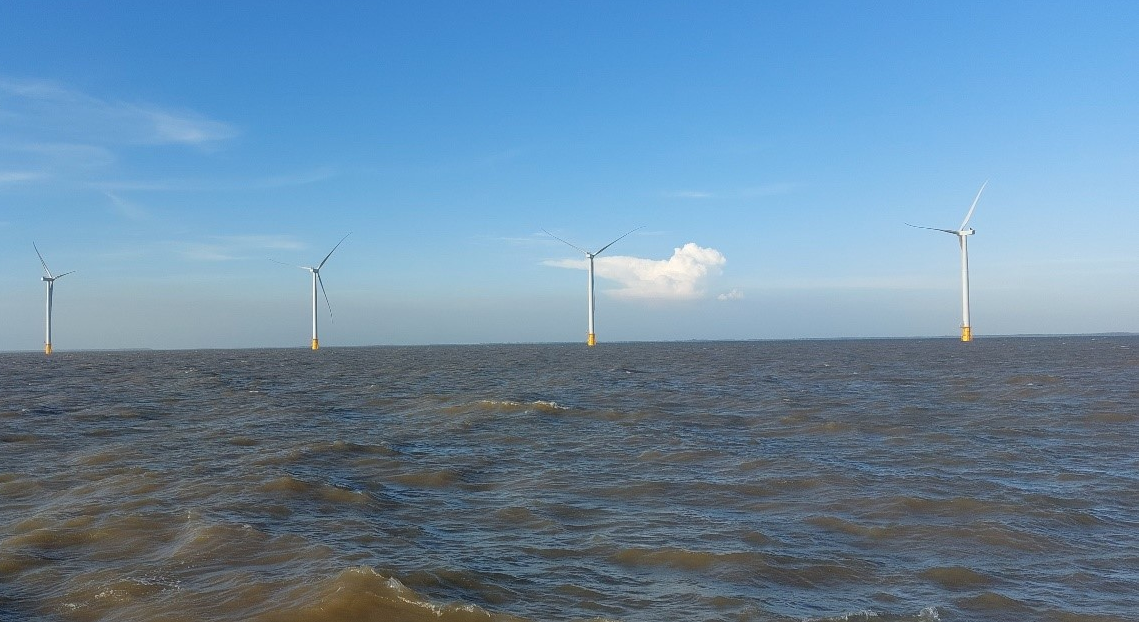 Announcement of the report on the technical potential of offshore wind energy in Vietnam. (Illustration photo)
After nearly 2 years of implementation, the report "Detailed assessment of wind resource potential in coastal areas (up to 6 nautical miles) and offshore areas in Vietnam" conducted by the National Center for Hydro-Meteorological Forecasting, with the support of UNDP and the Norwegian Embassy in Vietnam, is an important scientific basis contributing to the realization of that strategy.
The report provides a comprehensive, updated and high-resolution picture of the offshore wind resource potential of Vietnam - one of the countries with the largest offshore wind power potential in the region.
The report has provided a standardized and synchronized data set on Vietnam's offshore wind climate over 30 years (1991 - 2020), serving to determine the technical potential for offshore wind power development in coastal waters (up to 6 nautical miles) and the exclusive economic zone (EEZ) of Vietnam. On that basis, the report recommends solutions to support planning, investment and sustainable development of the renewable energy sector.
The report includes the following main contents: an overview of offshore wind power development policies and trends; a detailed description of the data and models used (including WRF, observational data, satellites and re-analysis); results of analysis of wind energy density and offshore wind power technical potential; Vietnam Offshore Wind Energy Atlas, including maps of wind speed distribution, energy density and technical capacity.
The report also provides detailed analysis of monthly and seasonal fluctuations in the year to determine the optimal exploitation period; assess the impact of meteorological and hydrological disasters on offshore wind power development.
In addition, the report provides specific recommendations for policy makers, investors and relevant agencies.
Source: Nangluongsachvietnam